What is Salmon PDRN in skincare?
Navigating the skincare world can be overwhelming, especially for newcomers. With scattered information about active ingredients—like retinol for anti-aging, acids for exfoliation, and niacinamide for brightening—it is easy to fall into a cycle of trial and error. Unfortunately, layering strong or incompatible ingredients without understanding how they interact can disrupt the skin barrier, trigger sensitivity, and lead to long-term damage.
Interestingly, many modern skincare innovations are inspired by nature—particularly from marine life. Fish, for example, have long been associated with healing and nourishment. Traditional observations noted that fish scales placed over minor wounds appeared to help protect the skin and support recovery. Today, medical-grade fish skin—especially from species like salmon—is actually used in clinical settings as a biological dressing because of its structural similarity to human skin and its natural collagen content. These properties help maintain moisture, support tissue repair, and create a protective environment for healing.
Beyond fish skin, fish oils are widely recognized for their health and skin benefits. Rich in omega-3 fatty acids such as EPA and DHA, fish oil helps reduce inflammation, strengthen the skin barrier, and improve hydration from within. These essential fatty acids support smoother skin texture, reduce redness, and may help manage conditions like dryness and irritation. Internally, omega-3s also contribute to brain function, joint health, cardiovascular support, and balanced immune responses—factors that indirectly influence overall skin health and aging.
Fish-derived nutrients extend even further. Marine collagen from fish supports skin elasticity and firmness, helping reduce the appearance of fine lines over time. Amino acids found in fish proteins assist in tissue repair, while trace minerals like zinc and selenium contribute to antioxidant protection and skin regeneration. These combined benefits have made marine-based ingredients increasingly attractive to both the medical and cosmetic industries.
This growing interest in marine healing components eventually led to one of the most talked-about innovations in modern skincare: Salmon PDRN. Derived from salmon DNA, PDRN (Polydeoxyribonucleotide) was initially studied for its regenerative and wound-healing properties in medical applications. Researchers discovered that this ingredient could help support tissue repair, improve microcirculation, and encourage cellular renewal. As a result, Salmon PDRN gradually transitioned from clinical use into the facial skincare industry, where it is now promoted for improving skin elasticity, boosting hydration, and supporting healthier-looking skin over time.
Benefits of Salmon PDRN in the Skincare World
As Salmon PDRN gained attention in dermatology. Whether applied topically or via clinical treatments, the proposed benefits of PDRN revolve around recovery and regeneration.
1. Skin Repair and Barrier Support
Salmon PDRN is researched for tissue recovery and, in skincare, supports the skin barrier after irritation, over-exfoliation, or procedures. By promoting repair signals, it strengthens skin structure over time, potentially reducing redness, dryness, and sensitivity.
2. Improved Hydration and Skin Elasticity
Salmon-derived PDRN is often paired with hydrating ingredients because it may help improve the skin’s ability to retain moisture. Healthier skin structure leads to smoother texture and improved elasticity, which is why it is commonly marketed as an anti-aging ingredient. A context inside an article I read supports that combining hyaluronic acid therapy with Salmon PDRN improves skin hydration, but that limits to combined ingredient or injectable/procedure-based treatment and not simply in a skincare serum=stronger hydration. Having a hyaluronic acid in your existing skincare clearly improves the hydration of your skin, and it's a fast, measurable hydration effect, where users can see results such as plumping and moisture increase of the skin. Meanwhile, salmon PDRN improves the skin’s ability to maintain hydration, it doesn’t hydrate the skin directly thus it helps skin produce and retain moisture better over time.
3. Anti-Inflammatory Properties
Because PDRN interacts with cellular repair pathways, it is believed to help calm inflammation. This makes it appealing for individuals experiencing redness, compromised skin barrier, or post-treatment irritation.
4. Support for Post-Procedure Recovery
In clinical dermatology, PDRN is frequently used after treatments such as:
- laser procedures
- microneedling
- chemical peels
- skin resurfacing treatments
It is applied to help accelerate healing, reduce downtime, and support tissue regeneration.
Given that the anti-aging benefits and cellular repair features of Salmon PDRN sound so promising, the question remains: why has One Truth 818 not yet incorporated it into their formulation?
Half of the answer lies below, Salmon PDRN as a topical skincare version is promising yet it does need a lot of research and experimentation just to let the molecule seep deep to cellular level. Most of the proven results came from procedures (laser, microneedling, and injectables) and few to none are proven from any standalone creams.
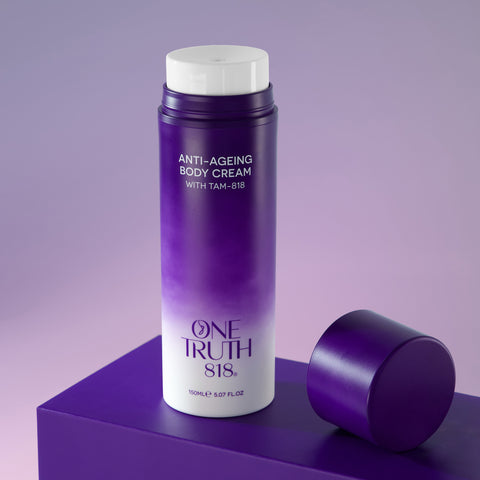
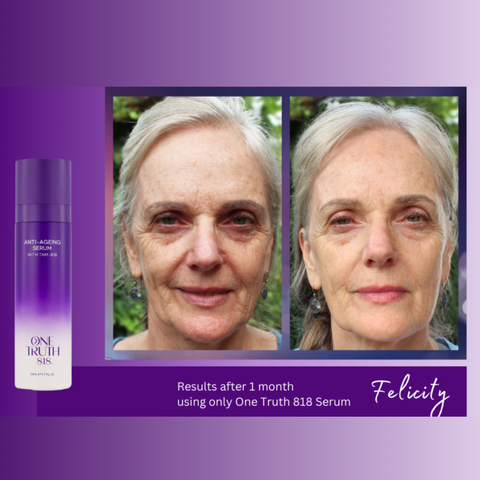
The One Truth 818's TAM-818 is the result of years of dedicated scientific research and experimentation by Dr. Bill Andrews and Rachael D’Aguiar. They have successfully refined this active molecule, which works on a cellular level by activating the telomeres of the DNA to regenerate, thereby reversing the aging process.
Topical Salmon PDRN vs Professional Treatments
There is an important distinction between topical PDRN skincare and clinical PDRN treatments. Most clinical studies showcasing PDRN's regenerative power are based on treatments that bypass the skin's outer barrier. Professional Treatments (Stronger Evidence)
These include:
- PDRN injections
- mesotherapy
- microneedling with PDRN
- post-laser topical application on compromised skin
In these cases, PDRN is delivered directly into deeper skin layers, allowing it to interact more effectively with cellular repair mechanisms. Most clinical studies showing strong regeneration benefits are based on these delivery methods which either damage the skin first or inject into it.
Topical Skincare Products (Limited Evidence)
When applied as a cream or serum, PDRN must penetrate the stratum corneum, the skin’s outer barrier. PDRN molecules are relatively large nucleotide fragments, which limits penetration through intact skin.
Because of this, topical PDRN is considered ‘supportive’ but not conclusively proven to deliver the same regenerative effects seen from injections.
Who May Benefit from Salmon PDRN
Salmon PDRN may be suitable for:
- Compromised or weakened skin barrier
- Post-procedure skin recovery
- Dry and dehydrated skin
- Sensitive or irritated skin
- Mild signs of aging
- Dull skin with poor texture
- Skin exposed to environmental stress
It is typically categorized as a repair-support ingredient, not a resurfacing active.
Who Should Avoid Salmon PDRN
Individuals With Fish Allergies - Because salmon PDRN is derived from fish DNA, individuals with known fish allergies should avoid it unless safety is confirmed. Although purification reduces proteins, caution is still recommended.
Acne-Prone Individuals (Formula Dependent) - Some PDRN products use heavy emollient bases designed for wound repair. These formulations may be too occlusive for acne-prone skin.
Users Expecting Rapid Visible Result: Topically applied PDRN does not behave like retinoids, exfoliating acids, or peptides that target wrinkles more directly. It supports repair gradually, meaning results may be subtle.
Not Necessary for Already Healthy Skin - For individuals with stable skin barrier and no irritation, PDRN may not provide noticeable improvement compared to other proven actives .It may be better used as a recovery ingredient for intermittent, skin damaging treatments, not layered with everything at once.
Animal-Derived PDRN vs Plant-Derived PDRN
As demand grows, brands have started introducing plant-derived or synthetic PDRN alternatives. These differ in several ways.
Animal-Derived PDRN (Salmon DNA)
- Extracted from salmon sperm DNA
- Closest structural similarity to human DNA fragments
- Most studied in wound healing and regeneration
- Commonly used in medical-grade applications
- Stronger clinical backing (mostly injectable use)
Plant-Derived PDRN
- Derived from plant nucleotides or fermented sources
- Vegan-friendly alternative
- Less clinical research available
- May function more as a conditioning or hydrating ingredient than on repair
- Marketed as “PDRN-like” rather than identical
While plant-based versions are appealing for ethical reasons, salmon-derived PDRN currently has more scientific support, particularly in medical and injectable treatments.
It is best viewed as a supportive regenerative ingredient after skin treatments where the skin is damaged e.g. micro needling, laser, chemical peels, not a miracle anti-aging shortcut. Clinical treatments using PDRN such as mesotherapy and other medical fish skin, show the most convincing results, while topical skincare versions remain promising but still require more long-term research.
For individuals dealing with sensitive skin, damaged barriers, or post-treatment recovery, Salmon PDRN may be a gentle option. However, expectations should remain realistic. To understand why regenerative ingredients like Salmon PDRN are used after procedures, it’s important to also understand what happens biologically when the skin is injured.
One of the earliest signals involved in this process comes from arachidonic acid (AA), a fatty acid stored in skin cell membranes. When the skin is disrupted—such as during lasers, microneedling, or other procedures—AA is released and converted into signaling molecules like prostaglandins and leukotrienes. These act as early “alarm signals” that tell the body the skin needs repair.
You can think of arachidonic acid as part of the skin’s emergency response system. Once activated, it helps initiate inflammation and brings in repair mechanisms to the area. Part of this process includes the activation of enzymes like MMPs, which help remove damaged structural components so new tissue can be rebuilt.
This response is essential for healing, but it is also carefully balanced. When the signaling is too frequent or too intense, the repair process can become temporarily overwhelming for the skin, affecting existing healthy structure before it fully recovers.
Understanding this cascade helps explain why regenerative ingredients like Salmon PDRN are being used in post-procedure skincare—and how they interact with the skin’s natural healing response. In the next article, we’ll take a closer look at how this inflammatory signaling system works in detail, and what it means for skin recovery and long-term skin health.
Why More Research Is Needed for Topical Salmon PDRN
Most of the scientific literature on PDRN involves:
- wound healing
- burns
- diabetic ulcers
- surgical recovery
- injectable dermatology treatments
These conditions involve damaged or open skin, where absorption is significantly higher.
For intact skin:
- Penetration depth is uncertain since active ingredients with higher molecular mass (greater than 500 Da) and high hydrophilicity are usually very difficult to penetrate into the skin for cosmetic products.
- The molecular size of the Salmon PDRN, derived from Salmon sperm DNA, is a mixture of deoxyribonucleotides with molecular weights ranging between 50 and 1,500 KDa.
- Long-term anti-aging effects not well established
- Limited human trials as a topical skincare
Myth: Salmon PDRN Increases Cell Turnover
This is one of the most common misconceptions. PDRN does not accelerate epidermal turnover like:
- retinoids
- AHAs
- BHAs
- exfoliating enzymes
Instead, PDRN supports:
- Adenosine A2A receptor activation - is the core validated mechanism that leads to reduced inflammation, improved blood flow, tissue repair signaling.
- Tissue repair signaling (fibroblasts + keratinocytes) - it helps repair damaged tissue by increased cell proliferation and migration and improved wound closure rates
- angiogenesis (capillary formation) - that matters because improved oxygen + nutrient delivery in damaged tissue, which is one reason it’s used in wound healing medicine, not cosmetic skincare.
- Collagen support - PDRN does NOT “contain collagen” or directly build skin structure. Instead it triggers signals to fibroblasts to increase collagen production and reduces collagen breakdown. Thus, having an “anti-aging collagen boost” is a secondary and indirect effect.
Salmon PDRN supports skin regeneration primarily through anti-inflammatory and tissue-repair signaling rather than by accelerating epidermal turnover or exfoliation. It does not function as a resurfacing agent and therefore does not create rapid visible ‘anti-aging’ changes typical of exfoliants or retinoids. Its effects are more relevant in conditions where skin repair pathways are already active, such as in irritated or compromised skin barriers.